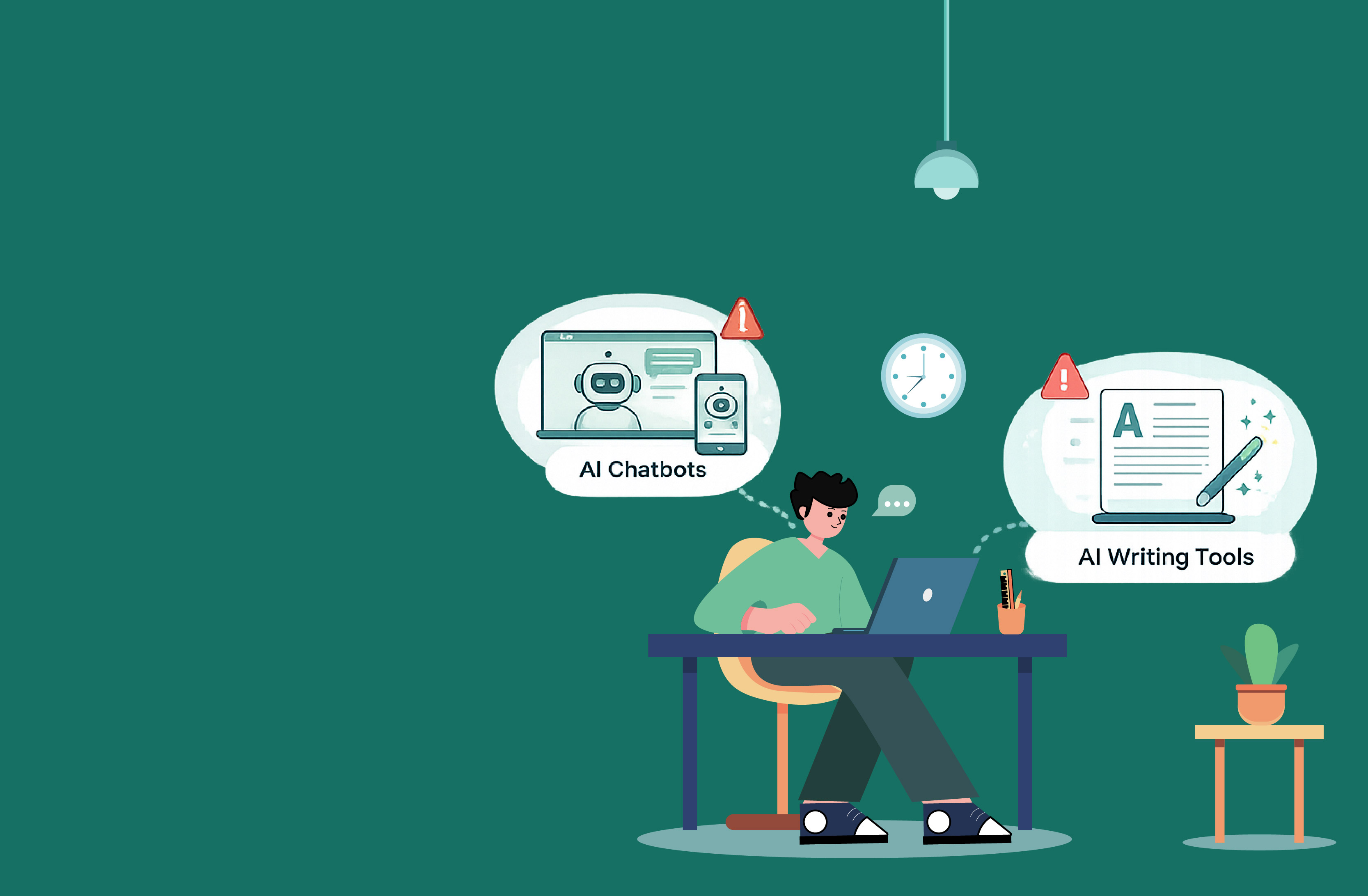
When the Association of Chartered Certified Accountants (ACCA) announced it would largely halt remote exams due to rising AI-driven cheating concerns, many saw it as proof that remote testing no longer works.
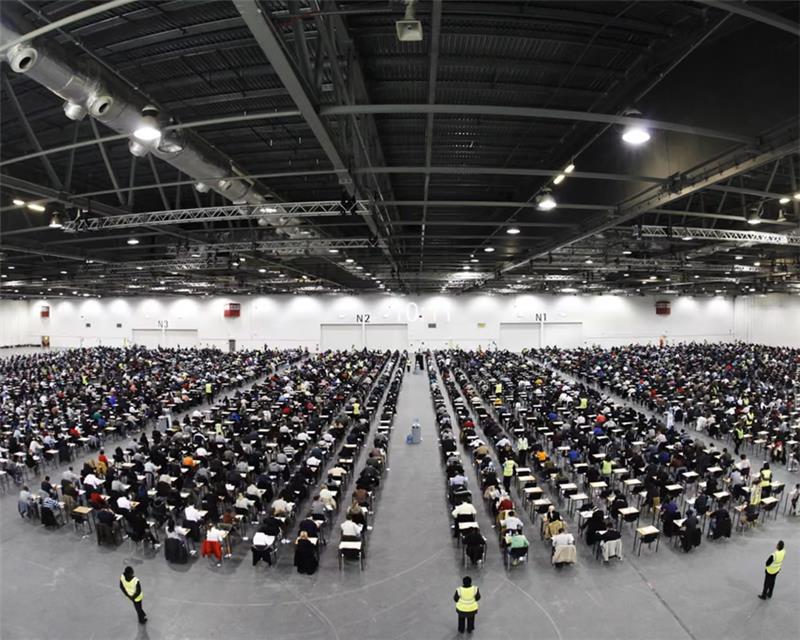
Close to 4,000 aspiring accountants sit for their ACCA exams at London’s Excel Center each session.
Source: https://www.theguardian.com/business/2025/dec/29/uk-accounting-remote-exams-ai-cheating-acca
That conclusion is understandable, but incomplete.
The real story is not that remote exams have failed.
The real story is that outdated remote proctoring models are no longer enough.
For years, many organizations relied on a narrow version of remote exam security:
A webcam
A browser lockdown tool
A human proctor watching a screen
A room scan at the start of the session
That may have worked in the pre-AI era.
It does not work in an era of:
Browser-based AI plugins
Secondary devices
Hidden earbuds
Screen overlays
Deepfakes
AI-generated responses
Item harvesting and answer sharing
The problem is not that remote exams are impossible to secure.
The problem is that many remote exam systems were never designed for the modern cheating landscape.
Remote Exam Security Was Built for Yesterday’s Threats
Many traditional remote proctoring solutions were designed around a simple assumption: If you watch the candidate closely enough, you can stop cheating.
That is no longer true.
Modern cheating rarely happens in plain sight.
Candidates can use:
Hidden phones
Off-screen devices
GPT-powered browser extensions
AI overlays
Silent prompting tools
Screen-sharing apps
Remote collaboration
The risk has expanded far beyond what a webcam alone can detect.
This is why organizations need to stop asking:
“Can remote proctoring stop cheating?”
And start asking:
“In an era of smarter cheating, how is your system actually preventing it?”
Cheating Does Not Start When the Exam Starts
One of the biggest misconceptions in the market is that cheating only happens during the exam session.
In reality, cheating often begins much earlier.
It can start with:
Weak item banks
Overexposed content
Reused forms
Predictable blueprints
Poor item rotation
Shared answer banks
Leaked questions on forums or the dark web
AI-generated practice responses that mirror operational items
That means organizations cannot rely on proctoring alone.
They need a layered integrity model that protects:
The content
The candidate
The device
The testing environment
The psychometric validity of the results
The Future of Secure Remote Exams Is Layered
The strongest assessment programs are no longer using a single security checkpoint.
They are using multiple layers of protection before, during, and after the exam.
Before the Exam
Modern assessment security begins long before the candidate logs in.
Organizations need:
AI-powered item generation with traceability
Item exposure monitoring
Enemy item detection
Honeypot content traps
Dynamic pool generation
Content monitoring across Web2, the dark web, and Web3 environments
Blueprint validation and psychometric review
During the Exam
Exam integrity during delivery now requires much more than webcam monitoring.
Organizations need:
Dual monitor detection
Screen mirroring and recording detection
GPT plugin and AI overlay detection
Voice biometrics
Facial recognition
Keystroke analysis
Environmental monitoring
After the Exam
The strongest organizations also investigate what happened after the exam session ends.
They review:
Candidate response times
Item exposure trends
Person-fit analysis
Item parameter drift
Differential item functioning
Suspicious score patterns
Pre-knowledge indicators
Behavioral anomalies
Content compromise signals
This is where psychometric intelligence becomes essential.
Because the goal is not just to detect suspicious moments.
The goal is to determine whether the score itself can be trusted.
In-Person Exams Are Not Immune to Cheating
Another common misconception is that moving back to test centers automatically solves the problem.
It does not.
In-person testing environments still face:
Proxy test takers
Hidden devices
Bathroom break question review
Paper theft
Question memorization
Organized impersonation rings
Human proctor inconsistency
Answer sharing
The difference is that many organizations feel more comfortable controlling physical location.
But physical testing is not inherently more secure.
It is simply a different risk model.
In fact, modern remote testing environments often provide more forensic evidence than physical test centers ever could.
Digital assessments can capture:
Screen activity
Device telemetry
Behavioral signals
Audio patterns
Identity checks
Environmental scans
Session logs
Candidate interactions
Real-time flags
That level of visibility is difficult to achieve in a traditional classroom or testing center.
The Future Is Not Remote Exams Versus In-Person Exams
The future is not about choosing between remote testing and physical testing.
The future is about choosing the right level of security for the right assessment.
Some exams may need:
AI-only monitoring
Record-and-review models
Hybrid delivery
Onsite testing
Secondary device monitoring
Device lockdown tools
Psychometric investigation
Organizations that continue using one-size-fits-all security models will struggle.
Organizations that adopt layered, adaptive, and data-driven integrity systems will be able to deliver secure exams anywhere.
Why ExamRoom.AI Is Different
Many remote proctoring vendors focus only on what happens during the exam.
ExamRoom.AI delivers a more comprehensive, end to end approach.
Rather than treating proctoring as a single event, ExamRoom.AI secures the entire assessment lifecycle.
Before the exam, ExamRoom.AI protects item banks, monitors content exposure, detects enemy items, uses honeypot techniques, supports dynamic pool generation, and monitors the web for leaked content.
During the exam, ExamRoom.AI combines AI proctoring, human oversight, ExamLock browser controls, Exam360 environmental monitoring, behavioral analysis, GPT extension detection, facial recognition, voice biometrics, and psychometric anomaly detection.
After the exam, ExamRoom.AI continues to evaluate item exposure, person-fit analysis, response time anomalies, pre-knowledge indicators, item parameter drift, differential item functioning, and suspicious scoring patterns.
This is what truly defines modern assessment security, an approach that goes beyond traditional methods to deliver a more comprehensive, adaptive, and resilient framework.
It is no longer enough to watch the candidate.
Institutions must protect the content, the device, the environment, the behavior, the score, and the integrity of the outcome.
That is why ExamRoom.AI positions itself as a Unified Assessment Platform™, not simply a remote proctoring vendor.
Final Thought
AI has changed cheating.
But it has not made remote exams obsolete.
It has raised the standard for what secure remote testing must be.
The institutions that succeed will not be the ones that abandon remote exams.
They will be the ones that move beyond webcam only proctoring and build assessment ecosystems designed for the realities of modern, AI driven cheating.
Because exam integrity is no longer about watching the candidate.
It’s about protecting the entire assessment lifecycle, from content creation to credential delivery.